Why go to war?
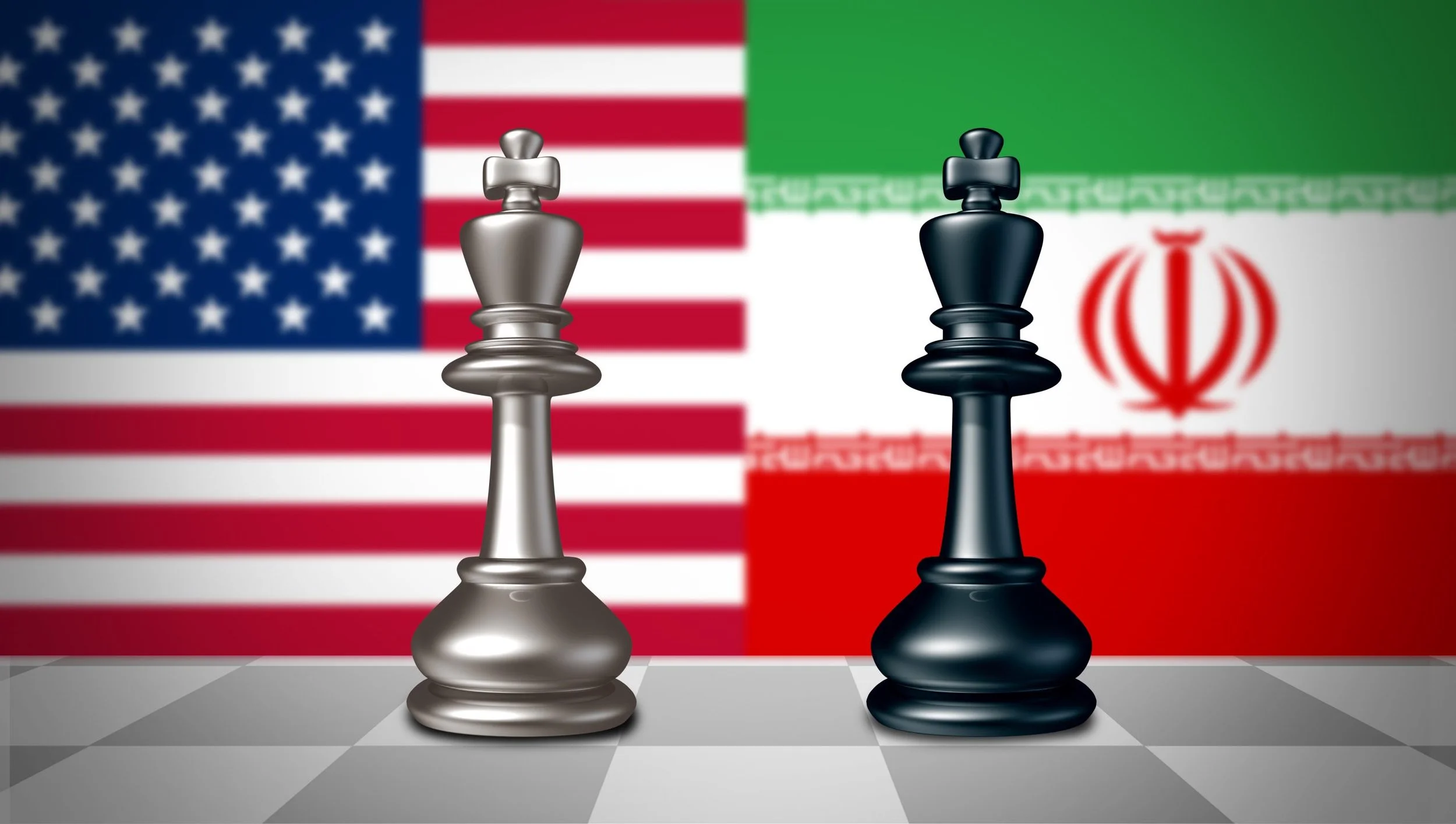
Image Credits: Photo: iStock: theasis
The decision to go to war has long been one of the most consequential choices a state can make, carrying profound strategic, political, economic, and human implications. Whether such a decision is a good idea cannot be answered in absolute terms; rather, it depends on the objectives sought, the context in which war is undertaken, and the frameworks through which it is evaluated. From both realist and constructivist perspectives, war may at times appear rational or even necessary, yet it consistently produces a mixture of intended gains and unintended consequences.
From a realist standpoint, war is often understood as an instrument of statecraft. Classical and structural realists argue that in an anarchic international system, where no overarching authority exists, states must rely on self-help to ensure survival (Waltz, 1979). Under such conditions, the use of force can be seen as a rational extension of policy, particularly when vital national interests are perceived to be at stake. In this sense, war may be judged a good idea if it successfully enhances security, deters adversaries, or shifts the balance of power in a state’s favor. Historical examples such as the Allied intervention in World War II are frequently cited to illustrate cases where war contributed to the defeat of aggressive regimes and the restoration of a more stable international order (Mearsheimer, 2001).
One of the principal benefits of going to war, therefore, lies in its potential to neutralize threats. Military action can degrade an adversary’s capabilities, disrupt hostile intentions, and signal resolve. Schelling (1966) emphasizes that the credibility of deterrence often depends on the demonstrated willingness to use force. In some cases, limited or decisive military action may prevent larger conflicts by establishing clear redlines. Additionally, war can consolidate alliances and strengthen domestic unity, at least in the short term, as populations rally around national objectives.
However, the drawbacks of war are extensive and frequently outweigh its benefits. Even from a realist perspective, war introduces significant uncertainty. Clausewitz famously described war as the realm of friction, where outcomes rarely align with initial expectations (Clausewitz, 1832/1976). Modern conflicts, particularly in the cyber and hybrid domains, further complicate prediction and control. Military engagements can escalate beyond intended limits, drawing in additional actors and producing unintended regional or global instability.
The economic costs of war are another major disadvantage. Sustained military campaigns require vast financial resources, often leading to increased national debt, inflationary pressures, and long-term economic disruption (Stiglitz and Bilmes, 2008). Infrastructure destruction, trade interruptions, and energy market volatility can extend these effects far beyond the battlefield. For example, conflicts affecting strategic chokepoints, like the Straits of Hormuz, or critical supply chains can trigger global economic repercussions, impacting both belligerents and neutral states as we now see with the
Human costs represent perhaps the most profound drawback. War inevitably results in loss of life, displacement, and psychological trauma. Civilian populations are increasingly affected in modern conflicts, raising ethical and legal concerns under international humanitarian law. These consequences not only shape immediate humanitarian outcomes but also influence long-term political stability, often fostering grievances that can fuel future conflict cycles.
Constructivist theory provides a different lens through which to assess the decision to go to war. Rather than focusing solely on material power and strategic calculation, constructivists emphasize the role of norms, identities, and perceptions (Wendt, 1999). From this perspective, war is not merely a tool but also a socially constructed act that carries symbolic meaning. States may go to war not only for security but also to defend identity, assert legitimacy, or respond to perceived injustices.
This interpretive dimension introduces additional drawbacks. Wars justified on ideological or identity-based grounds may be more difficult to resolve, as they involve deeply embedded narratives rather than negotiable interests. Moreover, the act of going to war can reshape international norms, either reinforcing or undermining existing rules governing the use of force. For instance, interventions lacking broad international legitimacy may erode norms of sovereignty and non-intervention, complicating future diplomatic efforts (Finnemore, 2003).
At the same time, constructivism highlights potential non-material benefits. In some cases, war may lead to norm evolution or institutional development. The aftermath of major conflicts has historically contributed to the creation of international organizations and legal frameworks aimed at preventing future wars, such as the United Nations system. However, these outcomes are contingent and often emerge only after significant costs have been incurred.
A critical issue in evaluating the decision to go to war is the problem of misperception. Both realist and constructivist scholars acknowledge that leaders operate under conditions of incomplete information. Jervis (1976) demonstrates how cognitive biases and misinterpretations can lead states to overestimate threats or underestimate the costs of conflict. This is particularly relevant in contemporary settings, where cyber operations, information warfare, and ambiguous signaling increase the likelihood of misunderstanding. As a result, decisions to go to war may be based on flawed assumptions, further complicating assessments of their rationality.
In weighing the benefits and drawbacks, it becomes evident that war is rarely a clear-cut good idea. While it may achieve specific strategic objectives, it almost always generates significant negative externalities. The balance between these outcomes depends on factors such as proportionality, clarity of objectives, international support, and post-conflict planning. Wars undertaken with limited, well-defined goals and broad legitimacy may yield more favorable outcomes than those driven by expansive or ambiguous ambitions.
Ultimately, the decision to go to war reflects a complex interplay between necessity and choice. In certain circumstances, such as self-defense against existential threats, it may be unavoidable and even justified. Yet even in such cases, the consequences extend far beyond immediate objectives, shaping international relations, domestic politics, and global norms for years to come. A cautious approach, grounded in both strategic calculation and normative consideration, remains essential.
References
Clausewitz, C. von (1976) On War. Princeton: Princeton University Press (original work published 1832).
Finnemore, M. (2003) The Purpose of Intervention: Changing Beliefs About the Use of Force. Ithaca: Cornell University Press.
Jervis, R. (1976) Perception and Misperception in International Politics. Princeton: Princeton University Press.
Mearsheimer, J.J. (2001) The Tragedy of Great Power Politics. New York: W.W. Norton.
Schelling, T.C. (1966) Arms and Influence. New Haven: Yale University Press.
Stiglitz, J.E. and Bilmes, L.J. (2008) The Three Trillion Dollar War. New York: W.W. Norton.
Waltz, K.N. (1979) Theory of International Politics. Reading, MA: Addison-Wesley.
Wendt, A. (1999) Social Theory of International Politics. Cambridge: Cambridge University Press.