The Hormuz Factor: A Missing Variable in U.S.–Israel War Planning
Escalation Management and Economic Statecraft: Energy Disruption in the Strait of Hormuz
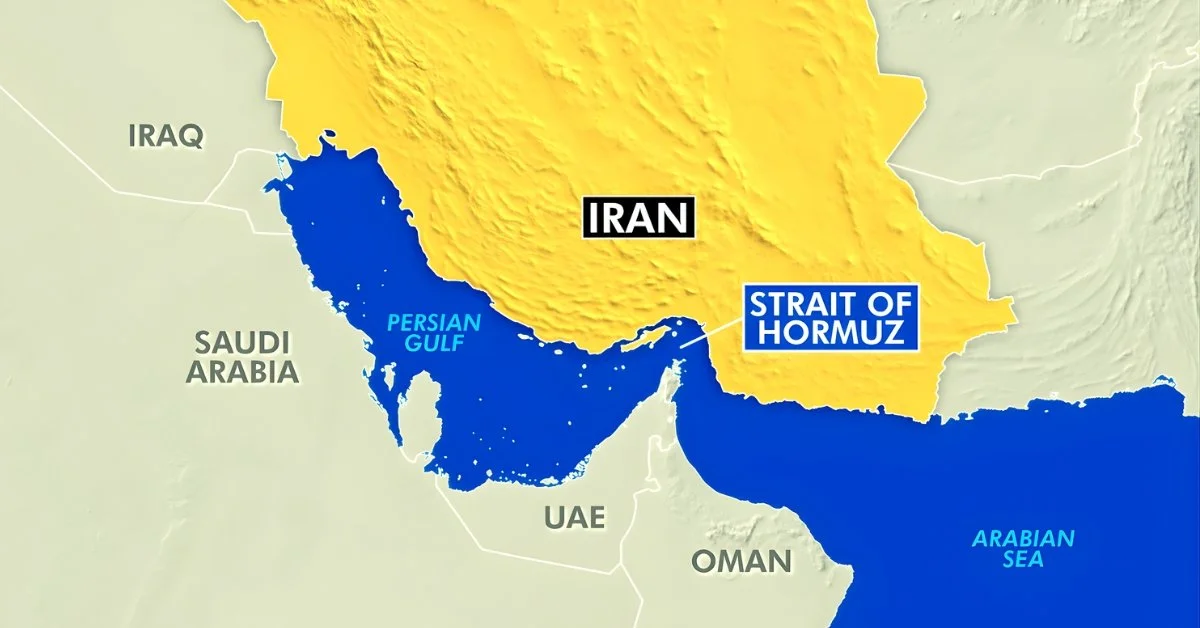
It is difficult to assume that policymakers in Washington did not consider the broader implications of disrupting energy flows through the Strait of Hormuz when assessing military options against Iran. Given the Strait’s central role in the global energy system, any serious escalation scenario would inevitably include projections of supply disruption, price volatility, and downstream geopolitical effects. In this sense, energy insecurity is not an unintended by-product of conflict, but a foreseeable condition embedded within it (Energy Information Administration, 2023).
From a realist perspective, such disruption carries the potential to generate uneven effects across the international system. While the United States would not be immune to rising energy prices, its position as a major oil and gas producer provides a degree of insulation not available to more import-dependent economies. States such as China, whose industrial output relies heavily on uninterrupted energy imports, are particularly exposed to supply shocks originating in the Gulf. As Kenneth Waltz (1979, p. 105) argues, the distribution of capabilities within the international system shapes how states experience and respond to external shocks. In this context, the asymmetrical impact of energy disruption reflects broader structural inequalities between energy-secure and energy-dependent states.
This introduces a subtle but important distinction. Energy disruption need not be deliberately engineered to function as a form of pressure; it can operate as an indirect consequence of military action that nonetheless produces strategic effects. This logic is consistent with realist assumptions regarding relative gains. As John Mearsheimer (2001, p. 36) contends, states are primarily concerned with how outcomes compare to those of their rivals, rather than absolute gains or losses. Even where all actors incur economic costs, the uneven distribution of those costs may create relative advantages. In this case, the United States may be better positioned to absorb economic disruption than its competitors, thereby deriving indirect strategic leverage.
However, any potential advantage derived from such disruption is constrained by its wider systemic consequences. Energy markets are deeply interconnected, and price shocks tend to reverberate globally. As Thomas Schelling (1966, p. 92) highlights, coercive strategies are often limited by their unpredictability and the risk of unintended escalation. The United States, despite increased energy independence, remains tied to global financial systems and would inevitably face domestic economic pressures, including inflation and political costs. More significantly, key allies in Europe and Asia, many of whom remain heavily reliant on Gulf energy—would experience immediate economic strain. This complicates any attempt to frame disruption as strategically advantageous in a straightforward manner, as it introduces alliance management challenges alongside economic instability.
There is also the issue of control. Once disruption begins, it becomes difficult to calibrate its scale or duration with precision. Market reactions, speculative behaviour, and escalation dynamics can amplify initial effects beyond what policymakers may have anticipated. As Schelling (1966, p. 166) notes, the process of escalation often involves elements that are not fully controllable by any single actor. In the case of the Strait of Hormuz, even limited disruption could trigger disproportionate economic and political consequences, underscoring the inherent risks of relying on indirect economic pressure within military strategy.
A constructivist reading adds a further dimension by emphasizing the interpretive and symbolic aspects of such disruption. The consequences are not solely material but also shaped by narratives and identity. As Alexander Wendt (1999, p. 231) argues, state behaviour is influenced by intersubjective meanings and shared understandings. In this context, the United States may seek to present itself as a guarantor of maritime stability and the free flow of commerce, while portraying Iran as a destabilising actor willing to jeopardise the global economy. These narratives influence how other states interpret the crisis and shape their responses, particularly in terms of diplomatic alignment and legitimacy.
At the same time, the disruption exposes the structural vulnerabilities of other major powers. China, for example, is placed in a reactive position, with its dependence on external energy routes highlighting the limits of its ability to shape events in distant regions. This reinforces the perception of uneven global influence, where control over maritime security remains closely associated with U.S. strategic capabilities. Such perceptions are central to constructivist analysis, as they contribute to the ongoing construction of international hierarchies and roles.
Taken together, these considerations suggest that energy disruption in the Strait of Hormuz occupies an ambiguous position within escalation management. It is unlikely to be pursued as a primary objective, given the scale of associated risks and the potential for uncontrollable escalation. Nevertheless, it is also improbable that its effects were regarded as entirely negative. Rather, disruption functions as a contingent variable, one that introduces both opportunity and risk, and whose strategic value depends on how its consequences are distributed and interpreted.
In this sense, the Strait of Hormuz is not merely a geographical chokepoint but a critical interface between military escalation and economic statecraft. Conflict in the Gulf inevitably extends into the global economic domain, where material capabilities, market dynamics, and political narratives intersect. The resulting pressures, while unpredictable, may generate relative advantages under certain conditions. However, those advantages remain inseparable from the broader instability they produce, limiting their reliability as an instrument of strategy.
References
Energy Information Administration (EIA) (2023) The Strait of Hormuz is the world’s most important oil transit chokepoint. Available at: https://www.eia.gov (Accessed: 29 March 2026).
Mearsheimer, J.J. (2001) The Tragedy of Great Power Politics. New York: W.W. Norton.
Schelling, T.C. (1966) Arms and Influence. New Haven: Yale University Press.
Waltz, K.N. (1979) Theory of International Politics. Reading, MA: Addison-Wesley.
Wendt, A. (1999) Social Theory of International Politics. Cambridge: Cambridge University Press.