Strategic Rhetoric or Credible Threat? Interpreting Recep Tayyip Erdogan’s Posturing Toward Israel Through Realist and Constructivist Lenses
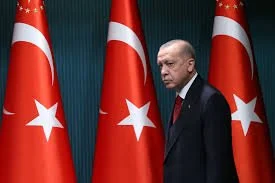
Recent statements by Recep Tayyip Erdogan that appear to threaten Israel are more accurately understood as political signaling rather than a declaration of intent to initiate military action. Although the language used in speeches, particularly during periods of heightened conflict involving Gaza, can be forceful, there is no credible evidence that Turkey is preparing for a direct military confrontation with Israel. Instead, such rhetoric reflects a convergence of domestic, regional, and strategic considerations.
At the domestic level, Erdogan’s position aligns with strong public support in Turkey for the Palestinian cause. Public opinion polling consistently demonstrates widespread sympathy for Palestinians and criticism of Israeli policy, particularly during periods of military escalation in Gaza (Aydın-Düzgit, 2020). In this context, Erdogan’s rhetoric serves to consolidate political support, reinforce his leadership credentials, and divert attention from domestic economic challenges. This aligns with broader patterns in Turkish foreign policy under the Justice and Development Party (AKP), where external issues are often framed in ways that resonate with domestic political narratives (Onis, 2019).
Regionally, Erdogan’s statements can be interpreted as part of a broader effort to position Turkey as a leading voice within the Muslim world. By adopting a strong stance against Israel, Turkey seeks to distinguish itself from other regional actors, such as Saudi Arabia and the United Arab Emirates, which have pursued more pragmatic or normalized relations with Israel in recent years (Biresselioglu et al., 2022). This reflects a strategic ambition to enhance Turkey’s soft power and influence across the Middle East and the Global South, particularly through normative appeals centered on justice, sovereignty, and opposition to perceived Western double standards.
From a realist perspective, Erdogan’s rhetoric functions as a form of strategic signaling rather than a precursor to military action. As Thomas Schelling argues, coercive diplomacy often relies on the manipulation of risk and perception rather than the execution of force itself (Schelling, 1966). In this case, Turkey’s statements increase diplomatic pressure on Israel while avoiding the substantial risks associated with escalation. A direct military confrontation would be highly unlikely given Turkey’s membership in NATO, its economic vulnerabilities, and the potential for conflict with the United States and other regional actors.
At the same time, a constructivist interpretation highlights the importance of identity and normative framing in shaping Erdogan’s discourse. Turkey’s self-conception as a historical protector of Muslim populations, rooted in both Ottoman legacy and contemporary political narratives, informs its vocal support for Palestinians (Wendt, 1999; Bilgin, 2016). Erdogan’s language therefore serves not only to signal strategic intent but also to construct a particular moral and political identity for Turkey on the world stage. By framing Israel’s actions as violations of international norms, Turkey seeks to influence global perceptions and legitimize its own position within debates over international law and human rights.
Finally, it is important to situate these developments within the broader trajectory of Turkey–Israel relations, which have historically oscillated between cooperation and confrontation. Despite periods of intense political disagreement, economic and security ties have often persisted beneath the surface (Inbar, 2011). This pattern suggests that rhetorical escalation does not necessarily translate into sustained strategic rupture.
In sum, Erdogan’s apparent threats should be understood as a combination of domestic political positioning, regional leadership ambitions, and strategic signaling, rather than a credible indication of imminent military action. The divergence between rhetoric and capability underscores the importance of interpreting such statements through both realist and constructivist lenses, particularly in the context of escalation management and the politics of perception in contemporary international relations.
References
Aydın-Duzgit, S. (2020) Turkey and the European Union: The Politics of Identity and Power. London: Palgrave Macmillan.
Bilgin, P. (2016) ‘Turkey’s “New” Foreign Policy Toward Eurasia’, Eurasian Geography and Economics, 57(3), pp. 323–341.
Biresselioglu, M.E., Demir, M.H. and Solak, B. (2022) ‘Turkey’s Middle East policy and regional competition’, Energy Policy, 162, 112789.
Inbar, E. (2011) Turkish-Israeli Relations: Crisis and Continuity. London: Routledge.
Onis, Z. (2019) ‘Turkey under the challenge of state capitalism: The political economy of the late AKP era’, Southeast European and Black Sea Studies, 19(2), pp. 201–225.
Schelling, T.C. (1966) Arms and Influence. New Haven: Yale University Press.
Wendt, A. (1999) Social Theory of International Politics. Cambridge: Cambridge University Press.